
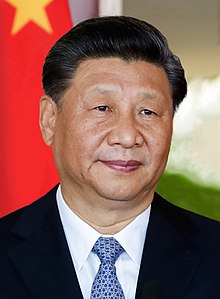
(Brasília - DF, 13/11/2019) Presidente da República Popular da China, Xi Pinping..Foto: Alan Santos/PR
This post has already been read at least 11337 times!
China has significantly expanded its undersea warfare capabilities through a sweeping, multi-year campaign involving dozens of research vessels and an extensive network of oceanic sensors, according to a detailed report by Army Recognition.
The report reveals that at least 42 Chinese research ships, supported by hundreds of subsea sensors, have been deployed across the Pacific, Indian, and Arctic oceans to generate highly detailed environmental intelligence for submarine operations. This growing database is designed to enhance Beijing’s ability to conduct stealth navigation, improve sonar performance, and strengthen anti-submarine warfare capabilities—particularly in regions of strategic importance to the United States Navy.
Drawing on findings also cited by Reuters, the operations span over five years and focus on critical maritime corridors and chokepoints, including waters around Taiwan, Guam, and the Malacca Strait. These areas are widely regarded as vital transit routes for U.S. and allied naval forces, making them key zones for underwater surveillance and potential conflict.
At the core of the initiative is a dual-layered intelligence system combining seabed mapping with real-time monitoring of ocean conditions. Chinese vessels have systematically charted underwater terrain—capturing depth variations, seabed composition, and geological features—while sensor arrays continuously track temperature, salinity, and ocean currents. These variables directly influence how sound travels underwater, a critical factor in submarine detection and evasion.
Defence analysts note that such precise environmental data allows submarines to exploit “acoustic shadow zones,” where sonar detection is significantly reduced. By navigating through these zones or positioning near seabed features like ridges and depressions, submarines can remain concealed while improving their own detection capabilities against adversaries.
A notable example highlighted in the report is the Dong Fang Hong 3, which conducted repeated survey missions between 2024 and 2025 in strategic locations near Taiwan, Guam, and the Indian Ocean. Its operations included revisiting previously surveyed areas—suggesting systematic data validation and refinement rather than isolated scientific exploration.
Investigations further show that China’s survey fleet employs tightly coordinated navigation patterns, moving in parallel lines to ensure complete seabed coverage. This technique produces high-resolution bathymetric maps essential for submarine maneuverability and sonar calibration. At least eight vessels are dedicated to such mapping missions, with several others equipped to perform similar functions, indicating a distributed and scalable capability.
Complementing these efforts is a vast network of fixed monitoring systems, including seabed sensors and moored buoys positioned along key submarine transit routes.
These installations provide continuous environmental data, enabling long-term tracking of underwater conditions rather than relying on one-time measurements.
While many of these missions are officially categorized as civilian scientific research—such as climate studies and oceanographic surveys—the report underscores their dual-use nature. The same datasets are directly applicable to military operations, reflecting a broader integration of civilian and defence objectives within China’s maritime strategy.
Geographically, the mapping activity aligns closely with areas of high operational significance to the United States, including the First Island Chain, waters east of the Philippines, and regions surrounding major U.S. military installations. Additional surveys have been conducted in the Indian Ocean and even Arctic waters, suggesting a forward-looking strategy that accounts for evolving global shipping routes and climate-driven changes in maritime access.
By combining repeated seabed surveys with persistent sensor monitoring, China is effectively constructing a layered, data-driven model of the world’s most contested underwater environments. Analysts say this approach reduces uncertainty in submarine operations, enabling more precise navigation, improved survivability, and enhanced detection of rival vessels.
The development is widely seen as a force multiplier for China’s expanding submarine fleet, which is projected to grow to around 80 vessels by 2035.
As undersea warfare becomes increasingly reliant on environmental intelligence, Beijing’s investment in ocean data infrastructure signals a strategic shift toward continuous, information-driven naval operations.
With credit to Army Recognition.
This post has already been read at least 11337 times!
About the Author

Discover more from The Street Reporters Newspaper
Subscribe to get the latest posts sent to your email.