
This post has already been read at least 11444 times!
A complex and high-stakes U.S. military operation inside Iran has successfully rescued a second American airman whose fighter jet was shot down deep within hostile territory, marking a dramatic escalation in tensions and showcasing both tactical success and costly sacrifice.
According to U.S. defence officials, the unnamed aviator—part of a two-man crew aboard an F-15E Strike Eagle—had remained stranded for more than 36 hours after the aircraft was downed by Iranian forces on Friday.
The first crew member was extracted shortly after the incident, while the second remained behind under precarious conditions until a carefully coordinated rescue mission was executed.
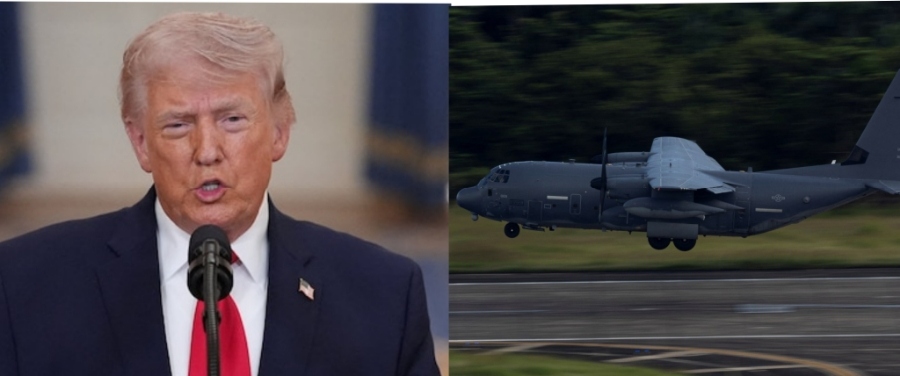
President Donald Trump confirmed the operation in an early Sunday statement, declaring that all U.S. personnel involved had safely exited Iranian airspace following the mission.
Contents
A Mission Behind Enemy Lines
Military analysts describe the rescue as a precision-driven special operations effort, likely involving rapid infiltration, real-time intelligence coordination, and aerial support under extreme risk. The operation underscores the U.S. military’s long-standing doctrine of recovering personnel, even in the most hostile environments.
Officials noted that beyond saving the airman, the mission prevented a potential strategic embarrassment. There had been growing concern within U.S. defence circles that Iranian authorities might capture the pilot and leverage the situation for propaganda or diplomatic concessions.
Advanced Aircraft Lost in Operation
Despite the successful extraction, the mission incurred significant material losses. Two U.S. special operations aircraft—identified as MC-130J Commando II—were destroyed during the course of the rescue.
Each MC-130J aircraft is valued at over $100 million and represents a critical asset in special operations logistics. Built for covert insertion and extraction missions, the aircraft is equipped with advanced avionics, in-flight refuelling capability, and defensive systems designed to evade detection and counter threats such as heat-seeking missiles.
U.S. officials confirmed that the planes were deliberately destroyed on the ground after complications arose during the mission. While details remain classified, defence sources indicated that the decision was taken to prevent the aircraft from falling into Iranian hands.
Iranian Reaction and Propaganda Claims
In the aftermath, Iranian officials released images purportedly showing the wreckage of at least one of the destroyed aircraft. The images quickly circulated across state-linked platforms, accompanied by sharp rhetoric from senior political figures.
Mohammad-Bagher Ghalibaf, Speaker of Iran’s Parliament, mocked the outcome in a social media post, suggesting that repeated “victories” of this nature would ultimately weaken the United States.
While Tehran has not officially confirmed the downing of the original F-15E jet, the incident and subsequent rescue operation are likely to further strain already fragile relations between both countries.
Strategic and Geopolitical Implications
The operation highlights the growing volatility in U.S.-Iran relations and raises questions about the rules of engagement in contested airspace. Defence experts warn that such incidents carry the risk of rapid escalation, particularly if miscalculations occur during high-risk missions.
At the same time, the successful recovery of both aircrew members reinforces the operational reach and commitment of U.S. special forces, even in denied environments. However, the destruction of high-value aircraft also underscores the steep cost of such missions—financially, tactically, and diplomatically.
As Washington weighs its next steps and Tehran amplifies its narrative, the incident is poised to become a defining flashpoint in the evolving security dynamics of the Middle East.
This post has already been read at least 11444 times!
About the Author

Discover more from The Street Reporters Newspaper
Subscribe to get the latest posts sent to your email.