This post has already been read at least 11267 times!
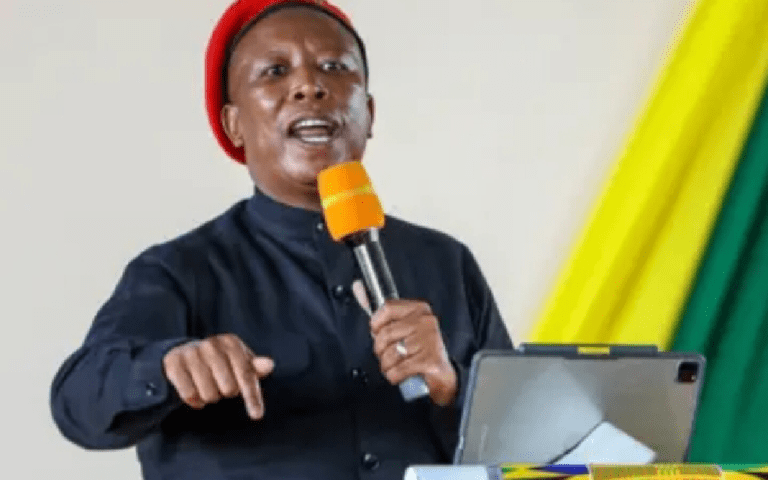
A South African court has sentenced prominent opposition politician and leader of the Economic Freedom Fighters (EFF), Julius Malema, to five years’ imprisonment over a firearm-related offence stemming from a 2018 political rally, in a ruling that has sent shockwaves across the country’s political landscape.
The judgment, delivered on April 16, 2026, follows Malema’s conviction for discharging a rifle in public during an EFF gathering held in 2018. The court found that the act contravened South Africa’s firearms legislation, which strictly regulates the use and handling of weapons in public spaces, regardless of intent or circumstance.
Contents
The Incident and Legal Findings
The case centers on widely circulated footage from the 2018 rally, in which Malema was seen firing a rifle into the air amid a charged political atmosphere. Prosecutors argued that the act constituted a clear violation of firearm laws designed to ensure public safety and prevent reckless use of weapons.
In its ruling, the court held that Malema’s status as a public figure and political leader imposed a higher duty of responsibility, particularly in a volatile environment where such actions could incite unrest or endanger lives. The court rejected arguments that the act was symbolic or ceremonial, emphasizing that the law makes no exceptions for political expression involving firearms.
Sentence and Immediate Aftermath
Malema was sentenced to five years in prison, a penalty reflecting what the court described as the seriousness of the offence and the need to deter similar conduct.
However, in a significant development, the court granted Malema bail pending appeal. This means the EFF leader will not immediately begin serving the prison term as his legal team prepares to challenge both the conviction and the sentence in higher courts.
Legal analysts note that appeals in such high-profile cases can take considerable time, effectively delaying any enforcement of the sentence until all judicial processes are exhausted.
Political and Public Reactions
The ruling has triggered a wave of reactions across South Africa’s political spectrum. Supporters of Malema and the EFF have criticized the judgment as politically motivated, arguing that it targets a vocal critic of the establishment.
Conversely, proponents of the ruling have welcomed it as a demonstration of judicial independence and the principle that no individual—regardless of political standing—is above the law.
The EFF, known for its radical economic policies and strong grassroots following, now faces uncertainty over its leadership trajectory should the appeal fail and the sentence be enforced.
Broader Implications
The case has reignited debate over political conduct, public safety, and the enforcement of firearm laws in South Africa. It also raises questions about accountability among public officials and the limits of symbolic political acts in a democratic society.
For Malema, a polarizing figure in South African politics, the legal battle ahead is likely to be as consequential as the ruling itself. The outcome of his appeal could shape not only his political future but also the broader discourse on leadership and legality in the country.
What Comes Next
Malema’s legal team is expected to file an appeal in the coming days, setting the stage for a prolonged judicial process. Until then, he remains free, continuing his political activities while contesting a conviction that could, if upheld, mark a turning point in his career.
As the situation unfolds, attention will remain firmly fixed on the courts—and on the implications of this landmark case for South Africa’s democracy and rule of law.
This post has already been read at least 11267 times!
About the Author

Discover more from The Street Reporters Newspaper
Subscribe to get the latest posts sent to your email.