This post has already been read at least 11163 times!
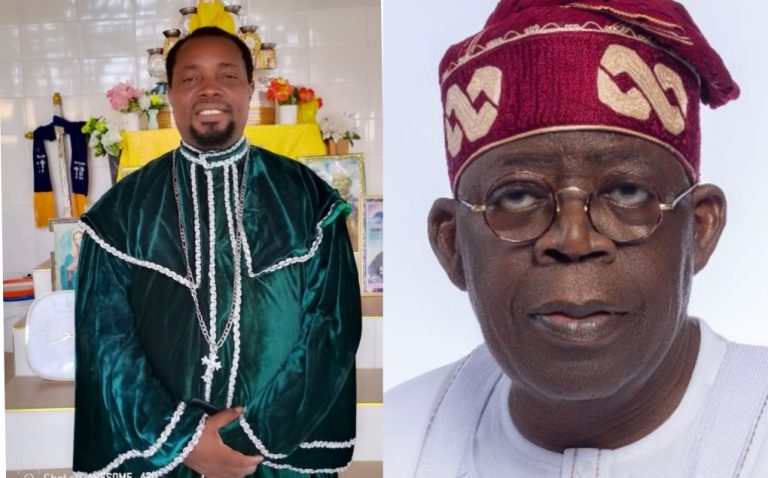
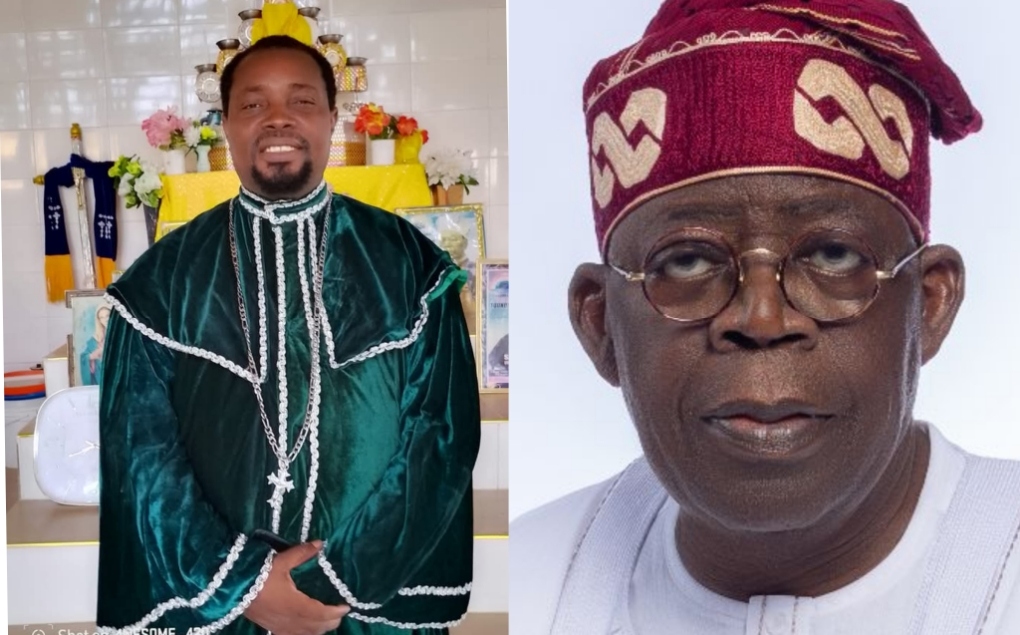
A prominent cleric, Prophet Hungbenu Michael Olusegun, has issued a sweeping national appeal urging Nigerians across ethnic, religious, and regional lines to rally behind President Bola Ahmed Tinubu for a second term in office, citing the need for policy continuity, national stability, and what he described as a divine mandate.
Speaking from his Abuja headquarters, the founder of the Celestrial Deliverance Church of Christ framed his call within both spiritual and policy-driven arguments, stressing that governance must be seen as a continuum rather than a series of abrupt transitions.
He argued that the reforms currently underway require time and consistency to yield measurable results, warning that a disruption at this stage could reverse gains already recorded.
According to him, national unity must transcend political and religious divides, declaring that electoral decisions should not be conflated with religious affiliations.
He emphasized that Nigerians, irrespective of origin, share a common destiny and must act collectively in shaping the country’s future through the ballot.
The cleric anchored his position on what he described as landmark economic reforms undertaken during Tinubu’s first term. He pointed to the removal of fuel subsidy, which he said has freed up over ₦400 billion monthly previously lost to corruption and inefficiencies, with funds now redirected toward infrastructure and social development.
He also referenced the unification of the exchange rate, noting that the policy has attracted over $2 billion in foreign portfolio inflows within a short period, signaling renewed investor confidence.
Further highlighting policy initiatives, he cited the introduction of a student loan scheme, which has reportedly seen over 100,000 applications, marking a significant shift in access to higher education financing.
He also pointed to ongoing efforts to strengthen local government autonomy, describing it as a critical step toward grassroots development and fiscal decentralization.
Drawing from international precedents, the cleric argued that transformative reforms typically require continuity beyond a single term to achieve lasting impact.
He referenced global leaders such as Lee Kuan Yew and Paul Kagame, asserting that sustained leadership has historically been key to consolidating reform agendas and delivering long-term economic growth.
On the issue of security, he acknowledged persistent challenges, particularly in the Middle Belt and northern regions, where communities have faced violent attacks.
However, he maintained that there have been measurable improvements, including the rescue of over 3,000 hostages within a year and enhanced military capabilities through the deployment of advanced equipment such as attack helicopters and surveillance drones.
He also pointed to reductions in oil theft, noting that daily losses have declined significantly, thereby improving national revenue streams. While acknowledging these gains, he made a direct appeal to the federal government to intensify efforts in protecting vulnerable communities and ensuring justice for victims of violence, especially in areas affected by targeted attacks.
The cleric further argued that the current administration has made strides in balancing regional representation within the federal structure. He noted that Tinubu’s emergence as a Southern leader followed eight years of Northern presidency, describing it as a corrective shift in the country’s power dynamics.
He highlighted the distribution of key political offices and appointments across regions and religious lines, presenting it as evidence of an inclusive governance approach that should be sustained.
Referencing comparative examples from countries such as India and Indonesia, he maintained that second-term administrations often consolidate initial reforms, leading to economic stability and increased foreign investment. He warned that frequent leadership changes could stall progress and keep Nigeria in a perpetual state of policy experimentation.
Concluding his address, the cleric framed his appeal as both patriotic and spiritual, calling on Nigerians to rise above divisions and support the continuity of governance. He urged citizens to pray for the country, cooperate with security agencies, and give the current administration the opportunity to complete its reform agenda.
He ended with a message of national solidarity and optimism, expressing hope that unity and sustained leadership would position Nigeria on a path toward lasting peace and prosperity.
This post has already been read at least 11163 times!
About The Author

Discover more from The Street Reporters Newspaper
Subscribe to get the latest posts sent to your email.